


Title: Mark Andrews of the Ravens Advocates for the Ban on Hip-Drop Tackling
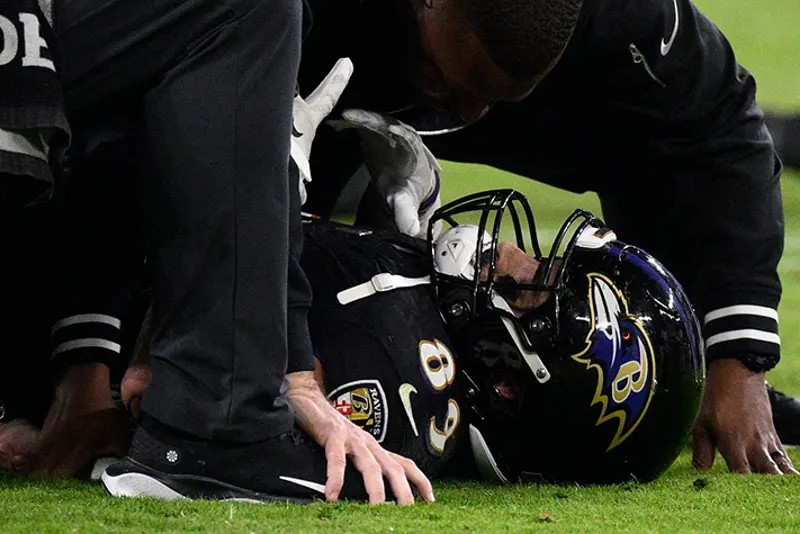
Baltimore Ravens tight end, Mark Andrews, has recently voiced his support for the ban on hip-drop tackling in the National Football League (NFL). This controversial technique has been a topic of heated debate among players, coaches, and fans alike. Andrews’ stance on this issue adds a significant voice to the ongoing conversation about player safety in the sport.
Hip-drop tackling, also known as the “seatbelt tackle,” involves a defender wrapping an arm around the ball carrier’s waist and using their hip to drop the player to the ground. While it can be an effective method of bringing down an opponent, it has been criticized for its potential to cause serious injuries.
Andrews, a Pro Bowl tight end known for his agility and strength on the field, has been vocal about his concerns regarding this tackling technique. He believes that while football is inherently a contact sport, there are ways to ensure player safety without compromising the integrity of the game.
“The NFL has always been about hard hits and physicality, but we also need to prioritize player safety,” Andrews said in a recent interview. “Hip-drop tackling can lead to unnecessary injuries that could be avoided with other tackling techniques.”
Andrews’ concerns are not unfounded. The hip-drop tackle has been linked to several high-profile injuries in recent years, including concussions and spinal injuries. Critics argue that the technique puts players at an increased risk of injury due to the forceful and often awkward way in which the tackled player hits the ground.
The NFL has made several rule changes over the years in an effort to improve player safety. These include stricter penalties for helmet-to-helmet hits and rules against hitting defenseless players. However, there is currently no specific rule against hip-drop tackling.
Andrews’ support for a ban on hip-drop tackling comes at a time when player safety is a major concern in the NFL. The league has faced criticism for its handling of concussions and other serious injuries, and many players and fans believe that more needs to be done to protect athletes.
“Football is a tough sport, and injuries are part of the game,” Andrews said. “But we need to do everything we can to minimize those risks. Banning hip-drop tackling is a step in the right direction.”
While it remains to be seen whether the NFL will take action on this issue, Andrews’ comments have certainly added fuel to the debate. As a respected player in the league, his support for a ban on hip-drop tackling could influence other players and potentially lead to changes in how the game is played.
In conclusion, Mark Andrews’ stance on hip-drop tackling highlights the ongoing debate about player safety in the NFL. His advocacy for a ban on this technique reflects a growing concern among players about the potential risks associated with certain tackling methods. As the conversation continues, it will be interesting to see how the NFL responds and what steps are taken to ensure player safety in the future.